The World of Cinematography
Welcome to our second episode of the newsletter called FilmdelaFilm. Today, we will guide you through the world of cinematography. We will travel back in time again to the beginnings of cinematography, from the first motion studies through the inventions that changed the world of images to the first film reels and public screenings. We will introduce inventors, technical solutions, and moments that turned recording into storytelling. So, tighten your seatbelt and let's travel together!
Do you remember your first cinema experience, the first performance, the film that took you into the movie halls? How did you feel from the moment you entered the hall? The huge screen is waiting to project the moving pictures in order that will make us feel emotional; the promotional posters are all around—sometimes we would stand in line for them so we could hang them at home on the wall. But even before the cinema existed, we need to thank a photography enthusiast, specifically Mr. Eadweard Muybridge, and his study of the movement of animals and people and how it is possible to create the illusion of continuous motion by capturing a fast sequence of still images. Thank you, Sir.
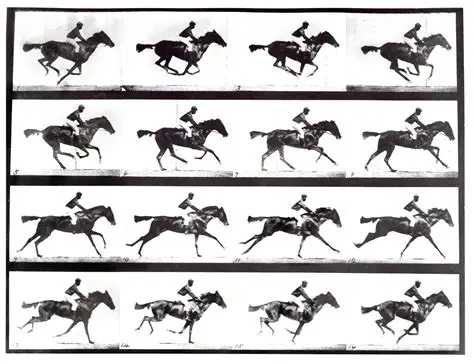
Wikipedia Image of Eadweard Muybridge - Sequence of a Horse Galloping
We don't want to forget about many other genius inventors; because of them, we can now enjoy the movie industry in its fullest. Next in the theater line is Sir Etienne-Jules Marey, who, four years later, in 1882, invented a chronophotographic gun, which was capable of taking 12 consecutive frames per second and recording all the frames of the same picture. Isn't that fascinating?
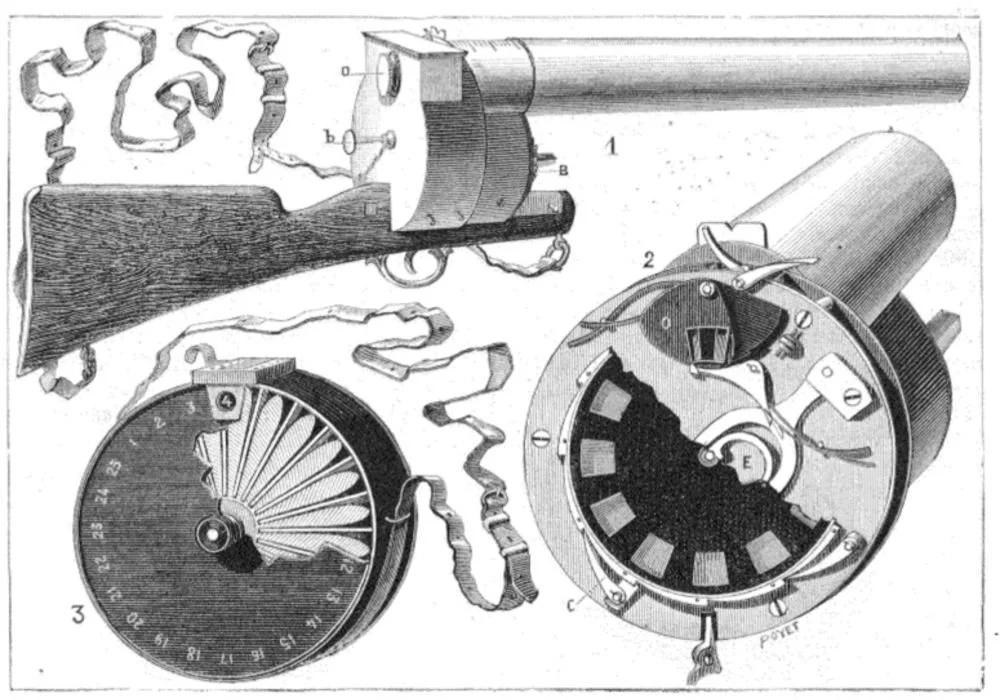
Wikipedia Image of Etienne-Jules Marey - Chronophotographic Gun
As we move forward in time, in 1895, in Europe, something remarkable happened, the Lumière brothers introduced the Cinématographe to the world. This device could record, develop, and project film for an audience. Wow! This was a crucial step for the film industry as film was no longer just a private amusement but could be enjoyed by a large audience.
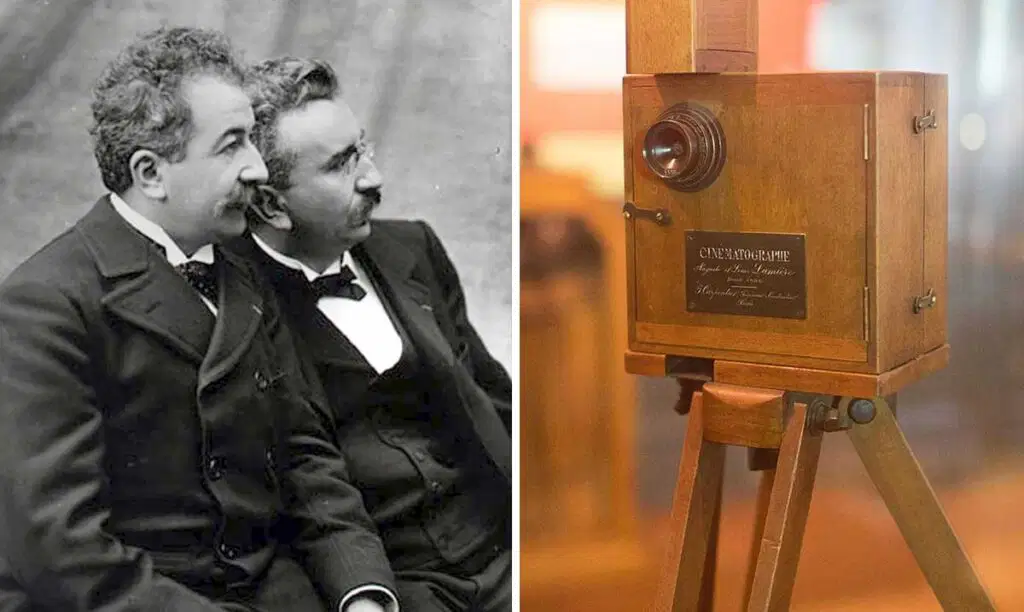
Wikipedia Image of Lumiere Brothers - The Cinematographe
Now, a small thought exercise: We are going back in time to visit a first movie theater. Let's imagine a small room where people gathered to experience something new and unusual. The lights went out, the projector turned on, and the first movement appeared on the screen. It could be a simple scene, perhaps a person watering a garden or a sneezing man. How do you feel? We can only trace back to our first experience when watching our first film in the movie theater. The audience's reaction could be probably a laughter, amazement, or sometimes even fear. It was a new medium that changed our perception of reality.
In order to watch film, we need some device on which the pictures were captured in a specific order for us to understand the concept projected onto screens. We can call this device a film reel. Based on the articles, we could describe the film reel as a strip of material, originally cellulose nitrate with image frames and perforations along the edges. These perforations allowed precise movement of the film through the camera and projector mechanism. The 35 mm width became the standard because it offered a good balance between image quality and handling practicality.
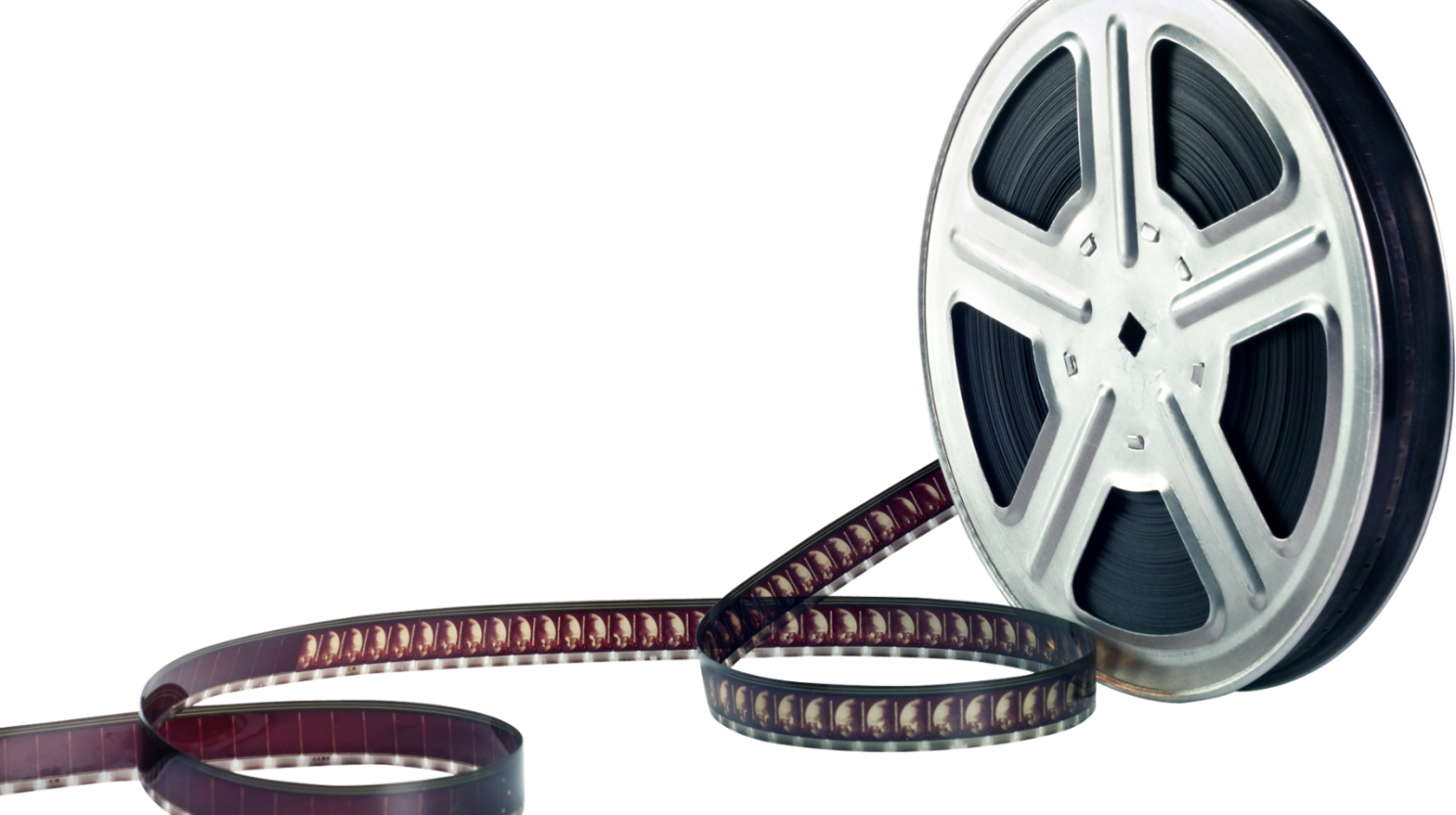
Film Reel
Have you ever visited the Salon Indien du Grand Café in Paris? If your answer is no, you can add this please to your bucket list when traveling to Paris because at this location a symbolic moment of public screening took place on December 28, 1895, when the Lumière brothers presented a series of short films. Among them was the famous piece L’Arroseur arrosé, a simple comic scene that showed that film can tell a story and evoke emotions. That was the moment when film began to be understood as a medium for storytelling, not just as a technical record.
Just for the information, The Salon Indien du Grand Café is now part of the Hôtel Scribe Paris, near Opéra Garnier.
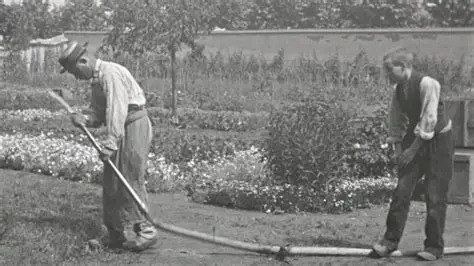
Wikipedia Image of L'Arroseur Arrosé
When we look at today's films, some of them are more than three hours long, but early films had a very limited length; reels were short, and cameras and projectors had mechanical limits. Therefore, the first films were often taking only a few dozen seconds to a few minutes. Nevertheless, great filmmakers quickly discovered the possibilities of editing and joining shots and began experimenting with narrative.
To understand how a movie is being captured, Let's briefly explain a few key terms:
Frame rate: In short, the frame rate refers to the number of frames per second; early systems used various speeds, often around 16 fps.
The next term we would like to explain is "editing," which is the process of joining shots into a logical or emotional whole piece. This is a lengthy and detailed part of the movie creation. Enormous amounts of hours are spent to make the movie as a whole; kudos to all the editors!
Perforations and intermittent movement: These technical terms describe mechanisms that ensured that each frame paused for a moment in front of the lens to be clearly exposed and projected.
The standardization came gradually. As the movie industry developed, manufacturers and movie theaters needed reliable formats, and 35 mm became the dominant format, and mechanical solutions, such as the escapement mechanism, allowed precise film movement.
Film gradually established itself as an art. The first festivals began to emerge, places where creativity was recognized, where creators met, and where quality criteria were formed. In September 1946, this first festival began a long golden era that made Cannes and its festival the place to be for all filmmaking countries. The Cannes Film Festival, along with the world's first Venice Film Festival, helped define film culture and created space for experimentation and international exchange. This year, the 79th Cannes Film Festival will start from the 12th of May, 2026, until the 23rd of May, 2026. The official film selection for 2026 is already disclosed at the official website:Selection - Festival de Cannes.
See you on a red carpet :)
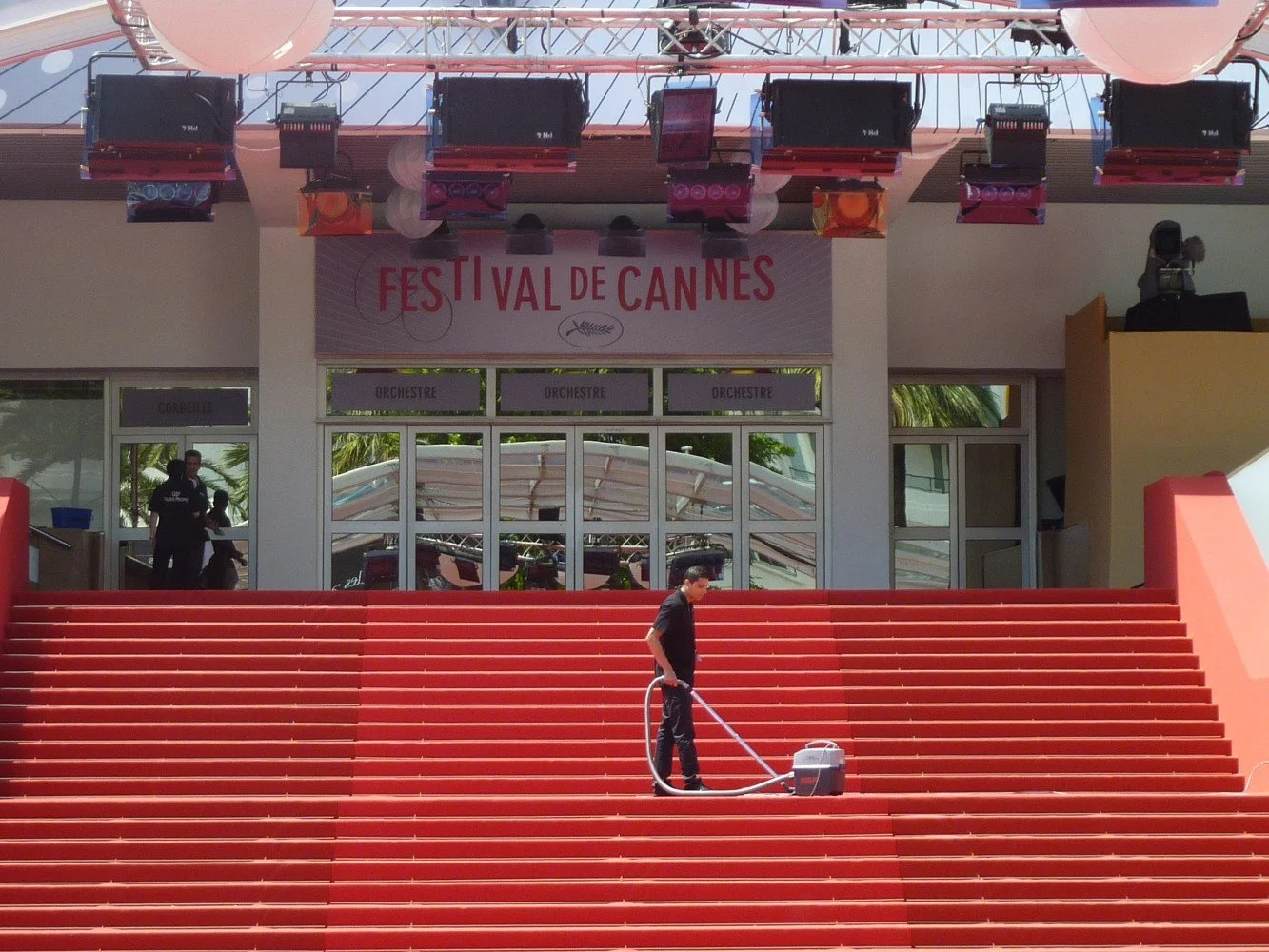
Festival De Cannes
Thank you film enthusiasts for spending some time learning more about the film industry with us. Today we introduced gentlemen Muybridge and Marey, the Lumière brothers' inventions, the standardization of the film reel and the emergence of festivals. Cinematography is the result of both technical invention and artistic discovery. The technology enabled new ways of storytelling, and the audience quickly embraced them.
If you enjoyed this newsletter, share it with others, type your thoughts in the comment section, and don't forget to join us here by clicking on the "subscribe" button. Which part of history would you like us to explore more deeply? In the next newsletter, we will look at the transition from silent film to sound and how sound changed film storytelling. We hope you will enjoy the next journey with us. Thank you for being with us on the journey through the cinematography world.
Till next time :)